Lion's Mane Mushroom at a Glance
- Botanical name
- Hericium erinaceus
- Also known as
- Yamabushitake, monkey head mushroom, hou tou gu
- Part used
- Fruiting body
- Where it grows
- Hardwood forests across North America, Europe and East Asia
- Traditional use
- Chinese and Japanese culinary and herbal practice
- Studied for
- Nerve growth factor, neuroplasticity and cognitive function in older adults
What Lion's Mane actually is
Lion's mane looks nothing like a supermarket mushroom. It grows as a white, rounded mass of long soft spines hanging from dead or dying hardwood, closer in appearance to a sea creature than a fungus. Cooked, it has a dense texture that restaurants often compare to crab meat, and it has been eaten as food for far longer than it has been sold in capsules.
The part used here is the fruiting body — the visible mushroom itself — rather than mycelium grown on grain, a distinction worth knowing when comparing products. Two groups of compounds drive the research interest: hericenones, found in the fruiting body, and erinacines, found in the mycelium.
Its place in East Asian practice
In China it appears as hou tou gu, monkey head mushroom, and in Japan as yamabushitake, named for the yamabushi mountain ascetics whose garments its shape was said to resemble. Both traditions treated it as food first and a tonic second, associated with general vitality and digestive wellbeing.
What is notable is what the tradition does not say. Unlike bacopa, lion's mane was never specifically a memory or study herb in historical practice. Its cognitive reputation is modern and laboratory-derived, dating from Japanese research in the 1990s. That is an honest distinction and one that most supplement marketing quietly collapses.
What research has examined
Interest centres on nerve growth factor, a protein involved in the survival and maintenance of certain neurons. Laboratory work has examined whether compounds from lion's mane influence NGF-related activity, and this is where most of the excitement in the category originates.
Two cautions belong right beside that. Much of the strongest work is laboratory or animal research, and the gap between a cell culture result and a meaningful effect in a person eating a capsule is very wide indeed. Human trials exist but are relatively few and generally small — a frequently cited Japanese study in older adults reported improvements on a cognitive scale during supplementation, with scores declining again after it stopped, but a single small trial is a starting point, not a conclusion.
Research has also touched on mood and general wellbeing, again in small samples. The honest summary is a genuinely interesting mechanism with human evidence that has not yet caught up to the enthusiasm surrounding it.
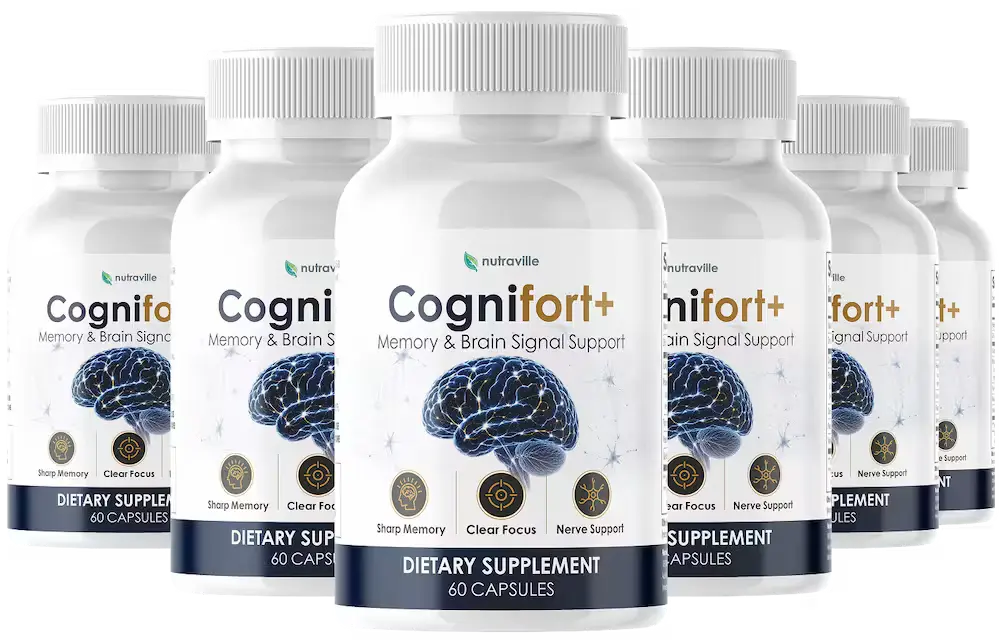
Why Lion's Mane is in CogniFort
It is included for the plasticity angle. Where bacopa is the memory-focused component and ginkgo the circulation one, lion's mane represents the nerve-health side of the formula — the long-term wellness principle rather than the day-to-day one.
It also earns its place as a botanical with a long, unremarkable safety record as food. A mushroom people have eaten by the bowlful for centuries carries a different risk profile from a novel isolated compound, which counts for something in a product meant to be taken daily for months.
What to reasonably expect
Set expectations low and time horizons long. Nothing about the proposed mechanism suggests a same-day or same-week effect, and if a product implies otherwise the mechanism is not what they are relying on.
Lion's mane is well tolerated by most people. The main caution is straightforward: if you have a mushroom allergy, avoid it. Occasional reports mention mild digestive discomfort or skin sensitivity.
It does not treat, prevent or slow any neurological condition, and any source suggesting otherwise has gone well past what the evidence supports. If you have concerns about your cognitive health, that is a conversation for a doctor.
Before you take anything. If you have a mushroom allergy, do not take this. Anyone on prescription medication, pregnant, nursing or under 18 should speak with a healthcare professional first. See the full disclaimer.