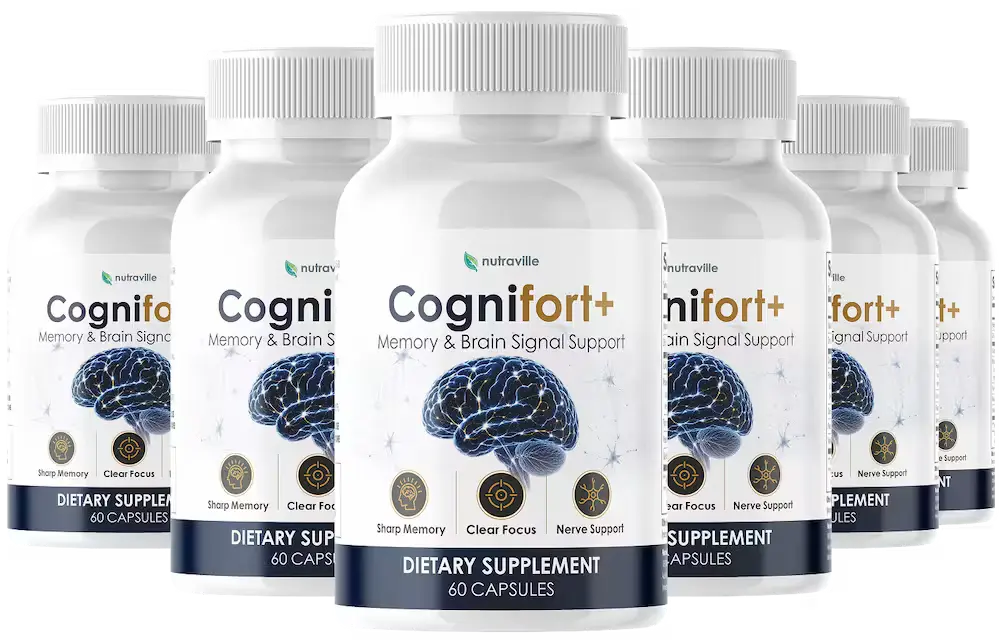
Turn any supplement bottle around and you get two things: marketing on the front and the supplement facts panel on the back. Only one of them contains information, and most buyers never learn to read it.
This is a practical guide to that panel, built around the single feature that decides whether the rest of it means anything: whether the amounts are disclosed.
What a proprietary blend actually is
A proprietary blend groups several ingredients under one name and one combined weight. You will see something like:
Advanced Cognitive Matrix™ — 750 mg
Bacopa extract, ginkgo leaf, rhodiola root, ginseng root, lion's mane
extract
That tells you five ingredients are present, together weighing 750 mg. It does not tell you the split. The blend could be 740 mg of the cheapest ingredient and 2.5 mg of each of the other four, and the label would be entirely accurate.
This is legal and common. Ingredients must be listed; individual amounts within a proprietary blend need not be.
Why blends exist
The stated reason is formula protection: disclosing exact ratios would let a competitor copy the product. That argument is not worthless, but it is weaker than it sounds. The ingredients are already listed. Anyone with a lab can reverse-engineer the ratios. The people who cannot are the buyers.
The more common reason is cost. Standardised extracts at research-level doses are expensive. A blend allows a manufacturer to include a token amount of the costly ingredients — enough to name them on the label — while the weight is made up by something cheap. The practice is known as fairy dusting, and the blend is what makes it invisible.
There is no way to distinguish a well-dosed blend from a badly dosed one from the outside. That is the entire problem.
The ingredient-order rule
Here is the trick worth knowing. Ingredients within a blend must be listed in descending order by weight. So while you cannot see the amounts, you can see the ranking — and combined with the total, that is often enough.
Take a 500 mg blend with eight ingredients, where the one being advertised on the front of the bottle sits sixth in the list. Sixth of eight, inside 500 mg total, means it is present in a small amount. If research on that ingredient uses 300 mg, the product is not delivering it. You have worked that out from the label without anyone telling you.
General rule: the further down the list an ingredient sits, and the more ingredients share the total, the less of it you are getting. A blend with fifteen named ingredients and a 600 mg total is, arithmetically, mostly nothing.
Five other things to check on a label
Species names, not common names
“Ginseng” is not specific. Asian ginseng (Panax ginseng), American ginseng (Panax quinquefolius) and Siberian ginseng (Eleutherococcus senticosus) are three different plants with three different research records, and the last is not a ginseng at all. A label giving the full botanical name is a label being careful.
Which part of the plant
Root, leaf, fruiting body, aerial parts — these are not interchangeable. Ginkgo research uses leaf extract, not seed. Lion's mane research distinguishes fruiting body from mycelium grown on grain, and the latter can be substantially grain by weight.
Standardisation
Look for a stated marker compound: rhodiola standardised to rosavins and salidroside, ginseng to ginsenosides, ginkgo to flavone glycosides and terpene lactones. Unstandardised plant material varies enormously between batches, which means the product you buy twice may not be the same product.
Servings per container
A common trap. A 60-capsule bottle with a three-capsule serving is a 20-day supply, not a month. Two products can look identically priced and differ by half on cost per day. Always work out the per-day cost before comparing.
Other ingredients
The line below the panel lists capsule material, fillers, flow agents and anything else. It is where you find out whether the capsule is gelatin or vegetable, and whether there is anything you need to avoid.
Front-of-bottle red flags
- “FDA approved.” Does not exist for dietary supplements. A product claiming it is either mistaken or misleading you.
- Disease claims. Cure, treat, reverse, prevent. Any of these attached to a condition means the seller has left the rules behind.
- Invented certifications. Official-looking seals from bodies that do not exist. They are trivial to check and rarely checked.
- Manufactured urgency. Countdown timers, “only 4 bottles left,” a stock warning that resets when you reload the page.
- Fabricated authority. Stock-photo doctors with invented credentials, or an inventor origin story with no verifiable person attached.
- No identifiable seller. No company name, no support contact, no return address. This is where the horror stories come from.
A thirty-second label check
- Turn the bottle around. Ignore the front entirely.
- Is there a proprietary blend? If yes, note where each named ingredient sits in the order and how many share the total.
- Are full species names and plant parts given?
- Is standardisation stated?
- Divide the price by servings per container for cost per day.
- Scan the front for the red flags above.
Most products fail at step two, in about ninety seconds.
Why this matters for what you buy
A disclosed label does not mean a product works. It means you can evaluate it. You can compare the amounts against published research, compare two products honestly, and know what you are paying for.
It is worth noticing that disclosure is the harder commercial choice. Individual numbers invite scrutiny in a way a single blend weight does not, and a company willing to invite that scrutiny is telling you something about how it expects to be checked. That is why the CogniFort formula lists each botanical separately — and why our assessment of the product treats it as the strongest thing about it.