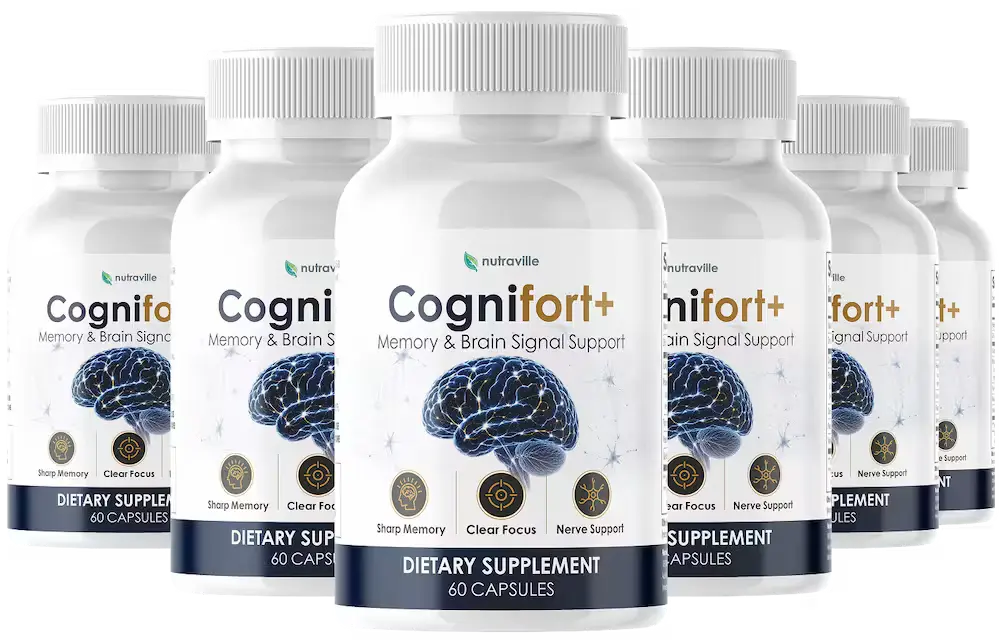
Start with the obvious conflict: this website earns a commission when someone buys CogniFort. You should weight everything below accordingly, and you should be reading other sources too.
What follows is not a defence. It is the same six-part test we would apply to any supplement in this category, applied here, with the results reported including the two that are not flattering. If you want to use the framework on a different product, it travels perfectly well.
Test one: are the ingredients ones anyone has actually studied?
The first filter is cheap to apply and eliminates a surprising amount of the market. Take the ingredient list and search each item on the NIH Office of Dietary Supplements site. If a botanical does not appear anywhere in the published literature, that is a problem.
CogniFort passes this. All five — Bacopa Monnieri, Lion's Mane, Ginkgo Biloba, Rhodiola Rosea and Panax Ginseng — have real research files. Ginkgo has one of the largest of any botanical in the world.
But passing this test is a low bar, and it is worth saying clearly what it does not mean. “Has been studied” is not “has been shown to work.” The evidence across this category is genuinely mixed. Ginkgo, despite being studied more than almost anything else, has produced inconsistent results on cognitive measures and large prevention trials did not find a preventive effect. Bacopa has more encouraging findings but with modest effect sizes. Lion's mane has an interesting mechanism and thin human evidence.
Verdict: pass, with an asterisk. Real ingredients with real research, and that research does not support strong claims.
Test two: can you see how much of each ingredient you are getting?
This is the test that separates the category faster than any other. A proprietary blend lists several ingredients under one combined weight, which means you can see what is included but not how much. A product can put a token amount of four botanicals behind a real dose of one, print a single number, and be entirely within the rules.
CogniFort passes cleanly. Every botanical is listed with its own amount. That means you can compare against research doses and against competitors, which is exactly what a blend prevents. Our guide to reading a supplement label covers how to do that comparison properly.
Verdict: clear pass, and the strongest thing about the product.
Test three: does the marketing stay inside the lines?
Watch for disease claims. Any supplement page suggesting a product treats, cures, reverses or prevents a medical condition has crossed a line, and it tells you something about the operation behind it. Watch also for “FDA approved,” which does not exist for dietary supplements, and for invented certifications or stock-photo doctors with fabricated credentials.
On this site you will find support language, explicit statements that this is not a treatment, no aggregate star ratings, and no claim of agency approval. That is deliberate.
Verdict: pass. Apply this one to every competitor page you read — it is the fastest disqualifier there is.
Test four: is the price defensible?
At $69 for one bottle, CogniFort is not cheap. In per-day terms the three packages run to roughly $2.30, $1.63 and $1.30, and the full cost breakdown works through it.
Is that defensible? Partly. It sits in the mid-to-upper range for the category, which is where standardised extracts and disclosed dosing usually land, because both cost more to produce than filler-heavy alternatives. You could buy the five botanicals separately for less, though you would then be managing five bottles and five doses, and cheap single-ingredient products are exactly where quality problems concentrate.
Verdict: reasonable, not a bargain. If your budget is tight, the honest advice is that sleep and exercise cost nothing and do more.
Test five: does the guarantee have teeth?
A guarantee is only meaningful if the window is long enough to actually test the product. A 30-day guarantee on something that needs 60 to 90 days of use is theatre — the window closes before you could possibly know.
CogniFort's 180-day window comfortably exceeds the evaluation period, which is the right shape. The caveat is that a guarantee is only as good as the company honouring it, so read the official purchase policy before ordering: what must be returned, where to send it, which shipping costs are refundable.
Verdict: pass on the terms. Verify the process for yourself.
Test six: is it clear who you are actually buying from?
Products with no identifiable seller, no working support contact and no return address are the ones that generate the horror stories. CogniFort is sold through an official seller with published support contact and a stated purchase policy, and this site is an independent affiliate resource rather than the seller — a distinction we state on the about page and in every footer.
One practical warning: buy through the official channel. Marketplace listings for supplements are not covered by the guarantee, storage conditions are unknown, and counterfeits exist. A price far below the official one is a signal, not a saving.
Verdict: pass.
Where it falls short
Two things, stated plainly.
The evidence does not support strong expectations. Five real ingredients with real research files still adds up to a category where results are mixed and effect sizes modest. If you buy this expecting a noticeable change, the likeliest outcome is disappointment. The realistic frame is small support, possibly unnoticeable, alongside habits that matter more.
The price is real money. $234 for the six-bottle package is a genuine expense, and for someone sleeping six hours a night it is money that would return more if spent on almost anything addressing that instead. Our piece on why mental fog happens lists the free interventions in order of likely impact, and we would rather you read that first.
The honest summary. Legitimate on the checks that matter — real ingredients, disclosed amounts, disciplined claims, a workable guarantee, an identifiable seller. It is not a breakthrough, it will not work for everyone, and it is no substitute for sleep, exercise or medical care. If that framing still appeals, it is a reasonable purchase. If you were hoping for something stronger, no product in this category can honestly offer it.
How to use this framework elsewhere
Run these six tests on the next brain supplement you encounter. Most fail at test two, within about ninety seconds of looking at the label. Many fail at test three before you get that far. If a product clears all six, you are at least looking at something built by people who expect to be checked — which is not the same as a product that will work for you, but it is where any sensible evaluation starts.